
Virus trasmessi dalle zanzare
Il consorzio italiano GENESIS conduce un ambizioso progetto volto a studiare la persistenza di questi virus nell’uomo
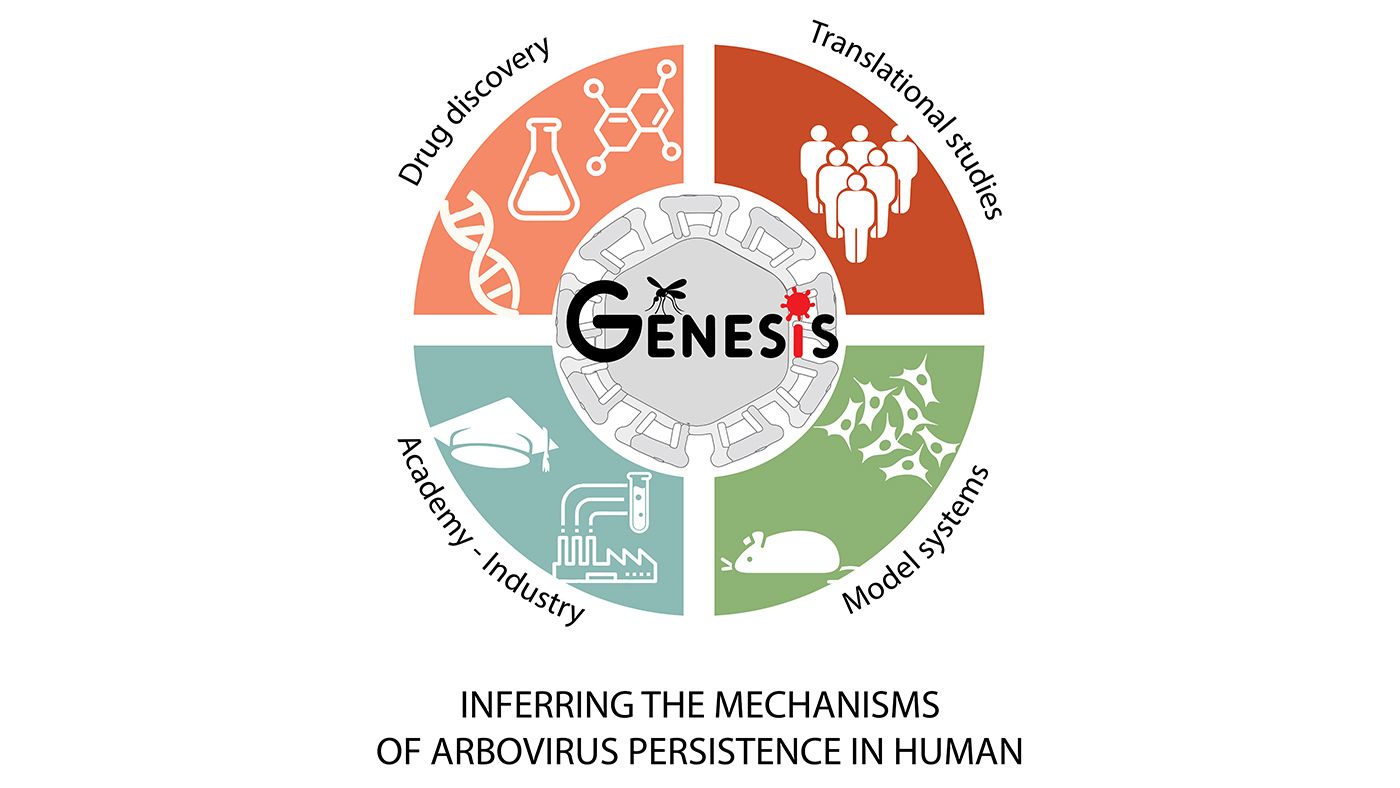
GENESIS è un progetto di ricerca nazionale da 2,5 milioni di euro finanziato dalla Fondazione INF-ACT nell’ambito del PNRR Missione 4, “Istruzione E Ricerca” - Componente 2, “Dalla Ricerca All’impresa” - Linea di investimento 1.3, finanziato dall’unione Europea – NEXTGENERATIONEU”. Il progetto studia come i virus trasmessi da zanzare e altri artropodi riescano a persistere nell’organismo umano, contribuendo così alla diffusione delle infezioni.
Coordinato dal professor Mauro Pistello dell’Università di Pisa, il progetto si concentra su arbovirus come dengue, chikungunya, Zika, virus del Nilo occidentale e Toscana, questi due ultimi endemici in Italia. GENESIS coinvolge una rete di eccellenza composta dall'Università di Pisa, dall'ICGEB di Trieste, dall'Istituto Spallanzani, dal TIGEM, dalla Fondazione Pascale, dall'Università del Piemonte Orientale, dall'Università di Trento, dall'Ospedale San Raffaele e da partner industriali quali DIESSE Diagnostica Senese e Scylla Biotech.
Il progetto nasce in un contesto di crescente allarme mondiale. L’OMS stima che nel 2025 i casi di dengue saranno 6 milioni. In Italia, nei primi cinque mesi dell’anno, sono stati registrati oltre 70 casi importati di dengue e 40 casi autoctoni di virus del Nilo occidentale. Alcuni di questi ultimi mortali. I cambiamenti climatici, la mobilità e la diffusione di vettori come l'Aedes albopictus aumentano il rischio di epidemie.
Utilizzando modelli in vitro e preclinici, GENESIS studia i meccanismi molecolari e immunologici che consentono ai virus di aggirare i meccanismi di difesa, di indurre malattia e di persistere nell’uomo. Dall’analisi di campioni da pazienti infetti saranno inoltre ricercati nuovi biomarcatori per migliorare diagnosi e terapia.
La stretta sinergia tra i partner del consorzio GENESIS di sviluppare nuove armi contro questi virus e di migliorare la preparazione contro altri arbovirus emergenti che si stanno affacciando anche nel nostro continente.
Mosquito-borne viruses
The Italian consortium GENESIS leads an ambitious project to investigate the persistence of these viruses in humans
GENESIS is a national research project worth 2.5 million euros, funded by the INF-ACT Foundation under the PNRR Missione 4, "Istruzione e Ricerca" - Componente 2, "Dalla Ricerca all’Impresa" – Linea di investimento 1.3 funded by the European Union – NEXTGENERATIONEU. The project investigates how viruses transmitted by mosquitoes and other arthropods persist in the human body and thus contribute to the spread of infections.
The project, coordinated by Professor Mauro Pistello from the University of Pisa, focuses on arboviruses such as dengue, chikungunya, Zika, West Nile and Tuscany viruses, the latter two being endemic in Italy. GENESIS involves a network of excellence made up of the University of Pisa, the ICGEB in Trieste, the Spallanzani Institute, TIGEM, the Pascale Foundation, the University of Eastern Piedmont, the University of Trento, the San Raffaele Hospital and industrial partners such as DIESSE Diagnostica Senese and Scylla Biotech.
The project was launched amid growing global concern. The WHO estimates that the number of dengue cases will reach 6 million by 2025. In Italy, over 70 imported dengue cases and 40 indigenous cases of West Nile virus were recorded in the first five months of the year. Some of the latter were fatal. Climate change, mobility and the spread of vectors such as Aedes albopictus increase the risk of epidemics.
Using in vitro and preclinical models, GENESIS is investigating the molecular and immunological mechanisms that enable viruses to evade defence mechanisms, cause disease and survive in humans. Analysing samples from infected patients will also enable the identification of new biomarkers to improve diagnosis and treatment.
The close synergy between the partners of the GENESIS consortium will help to develop new weapons against these viruses and improve defences against other emerging arboviruses that are also appearing on our continent.
University of Pisa
Department of Translational Research
Tel +39 050 2211828
www.medtrasl.unipi.it
.jpg?1754379982)

.jpg?1754379982)
.jpg?1754379982)






.jpg?1785402015)